 Centre International de Recherche Scientifique
Centre International de Recherche Scientifique
Centre International de Recherche Scientifique
 caa
caa
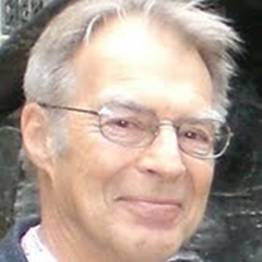
Regents\' Professor, Department of Chemistry and Biochemistry, Arizona State University, Tempe, USA.
Austen Angell is best known for his work on supercooled liquids and the glass transition, and has been the recipient of two internationally contested awards in this area (the Morey Award of the American Ceramic Society, and the Mott Award of the Journal of Non-Crystalline Solids, both for the development of the \"strong and fragile liquids\" classification). His work on the extraordinary behavior of supercooled water and aqueous solutions is particularly well known. Besides these subjects, he has worked on the problem of glassy electrolytes (while at Purdue University) and on non-aqueous solvents for Li battery electrolytes and on polymer-based, or polymer-containing, lithium battery electrolytes (while at Arizona State University). He is credited with the development of the \"fragility\" concept for liquids in general, the \"decoupling index\" concept for characterizing the freedom of conducting species to move independent of the supporting medium (liquid, polymer or glass), and with the \"polymer-in-salt\" concept for high decoupling index non-glassy lithium battery electrolytes. His group has developed the widest electrochemical window solvent on record (ethyl-methyl sulfone, 5.9 V) and the most completely dissociating salt on record (LiBOB) according to high temperature dilute solution studies.
Hildebrand award of the Amer. Chem. Soc. (for liquids studies), 2004.
NSF Special Creativity Award (DMR, Solid State Chemistry) 1994.
Neville Mott Award of the Journal of Non-Cryst. Sol., 1992.
G.W. Morey Award of the American Ceramic Society, Glass Division, 1990.
H.N. McCoy Faculty Research Award, Purdue University, 1987.
NSF Special Creativity Award (DMR, Solid State Chemistry) 1985.
Faculty Research Award, Purdue University, 1978.
\"Chemical order lifetimes in liquids and a new fictive temperature for glassformers,\" Luz-Maria Martinez and C. Austen Angell, Physica A: Statistical Mechanics and its Applications 314, 548-559 (2002).
\"Calorimetric studies of the energy landscapes of glassformers by hyperquenching methods,\" C. Austen Angell, J. Thermal Analysis 69, 785-794 (2002)
\"Liquid-liquid phase transition in supercooled liquid silicon,\" Srikanth Sastry and C. Austen. Angell, Nature Materials 2, 739-743 (2003)
\"Limiting tensions for liquids and glasses from laboratory and MD studies,\" Q. Zheng, J. Green, J. Kieffer, P. H. Poole, J. Shao, G. H. Wolf, and C. A. Angell, in Liquids under Negative Pressures NATO-ASI, Kluwer Academic Pub., 2002, pp. –46. (Liquids Under Negative Pressure ARW is available in pdf: )
\"Direct determination of kinetic fragility indices of glassforming liquids by differential scanning calorimetry: Kinetic vs. thermodynamic fragilities\" L. Wang, V. Velikov and C. A. Angell, J. Chem Phys., 117 (22), 10191 (2002)
\"Ionic conductivities of hybrid inorganic sulfide-polyether electrolytes,\" A. Hayashi, L.-M. Wang, and C. A. Angell, Electrochimica Acta. 48, 2003-2008, (2003)
\"PoLiMOB-lithium salt complexes: from salt-in-polymer to polymer-in-salt electrolytes,\" W. Xu, L. Wang, and C. A. Angell, Electrochimica Acta, 48, 2037, (2003)
\"Polymer electrolytes from plasticized polymobs and their gel forms, W. Xu and C. A. Angell, Electrochimica Acta 48, 2029-2035 (2003)
\"Anion-trapping and polyanionic electrolytes based on acid-in-chain borate polymers, W. Xu, X.-G. Sun, and C. A. Angell, Electrochimica Acta, 48, 2255-2266, (2003)
\"Clarifying the glass transition behavior of water by comparison with hyperquenched inorganic glasses\". Y-Z, Yue and C. A. Angell, Nature, 427, 717-721, 2004
\"Phase transitions in liquids and glasses: their origin, and possible links to switching behavior,\" C. A. Angell. invited for \"Physics and Applications of Disordered Materials\". Editor: M. Popescu, INOE, 2002, Chap. 1 p. 1-18.
\"Electrospray techniques for the study of liquid energetics by hyperquenched glass calorimetry\" Li-Min Wang,, Steve Borick,,and C. Austen Angell ,Phys. Rev.B, (submitted)
\"Hyperquenching + cold equilibration strategies for the study of liquid-liquid and protein folding processes\". C. Austen Angell and Limin Wang., (invited for special issue of Biophys. Chem. (Festschrift for Walter Kauzmann) 105, 621-637 (2003)
\"Ionic Liquids: Ion Mobilities, Glass temperatures and fragilities.\" Wu Xu, E. I. Cooper and C. Austen Angell, J. Phys Chem. B 107(25), 6170, (2003)
\"Transport-Vapor Pressure Relations, and Fragility in Ionic Liquids\". C. A. Angell, Wu Xu, M. Yoshizawa, A. Hayashi, and J.-P. Belieres. in the book Ionic Liquids, Ed. M. Ohno, (in Japanese: English language version available on request).
\"High conductivity of superionic-glass-in-ionic-liquid solutions\". A. Hayashi et al, Electrochemical and Solid State Letters 6, E19-E22 (2003)
\"Potential Energy, Relaxation, Vibrational Dynamics and the boson peak, of hyperquenched glasses\". C. A. Angell, Yuanzheng Yue, Limin Wang, John R. D. Copley, Steve Borick and Stefano Mossa. J. Phys. Cond Matt 15, , S1051-S1068 (2003)
\"Response to \"Comment on \'Direct determination of the fragility indexes of glassforming liquids by differential scanning calorimetry. Kinetic vs thermodynamic fragilities\' \" Limin Wang and C, A. Angell , J. Chem. Phys. 118, 10353-10355 (2003)
\"Ionic liquids of chelatoborates as model glassformers\". Wu Xu Limin Wang, Ronald Nieman and C. A. Angell., J. Phys. Chem.B, 107, 11749-11756 (2003)
\"Ionic liquids by proton transfer : vapor pressure and conductivity, and the relevance of ?pKa from aqueous solutions\". . M. Yoshizawa, Wu. Xu, and C. A. Angell, . Chem. Soc., 125, 13411-15419 (2003)
\"Recent Results on the connection between thermodynamics and dynamics in Supercooled water\". F. W. Starr, C. A. Angell. Emilia la Nave Srikanth Sastry, Antonio Scala, Francesco Sciortino and H. Eugene Stanley, Biophys. Chem. 105, 573-583, (2003)
\"421. New Sulfone Electrolytes II with Cyclo alkyl groups for non-exfoliation of graphite anodes\". Xiao-Guang Sun and C. Austen Angell. Solid State Ionics, 175, 257-260 (2004)
\"New single ion conductors (\"polyBOP\" and analogs) for rechargeable lithium batteries\". Xiao-Guang Sun and C. Austen Angell ,Solid State Ionics, 175, 743-746, (2004)
\"Ionic liquids: Inorganic vs. organic, protic vs. aprotic, and Coulomb control vs. van der Waals control\". C. Austen Angell, Wu Xu, Masahiro Yoshizawa and Jean-Philippe Belieres in Ionic Liquids, (International Symposium in honour of Marcelle Gaune-Escard) Eds H. Oye, A.Jagtoyen et al. pp. 389-398.
\"Solvent-free electrolytes with aqueous solution-like conductivities\". Wu Xu and C. A. Angell, Science, 302, 422-425, October 17 issue, (2003)
\"LiMOB, an unsymmetrical nonaromatic orthoborate salt for non-aqueous solution electrochemical applications\". Xu W, Shusterman AJ, Marzke R, et al. J. Electrochem. Soc 151 (4): A632-A638 2004
\"Raining Lead around 250 mya: a smoking gun for an Australian impact origin for the Permo-Triassic extinction\" Jim C. Standard and C. Austen Angell,)
“Vibrational dynamics and thermodynamics, ideal glass transitions and folding transitions, in liquids and biomolecules”, C. Austen Angell, Li-min Wang, Stefano Mossa, and John R.D. Copley, A. I. P. Conference Proceedings (“Slow Dynamics” 2003), 708, 473 (2004).
\"ACS (NewYork) Abstract: Ionic liquids by proton transfer, delta PKA, and the ionic liquid fuel cell\". Yoshizawa M, Belieres JP, Xu W, Angell CA ABSTRACTS OF PAPERS OF THE AMERICAN CHEMICAL SOCIETY 226: U627-U627 083-IEC Part 1 SEP 2003
\"Amorphous Water\". C. A. Angell, Annu. Rev. Phys. Chem. 5, 559—583, 2004
\"The glass transition temperature of water: a simulation study\". N.Giovambattista, C. A. Angell, F. Sciortino, and H. E. Stanley, Phys. Rev. Lett. 93(4)4, 047801 (2004)
\"Thermodynamics and dynamics of glass formation \" C. A. Angell and J.L Green, for “Lyophilization of Biopharma-ceuticals.” Eds., M. Pikal and R Constantino, AAPS press, 2005, pp 367-422.
“Physical Chemistry of Ionic Liquids, Inorganic and organic, Protic and Aprotic”. C. A. Angell, Wu Xu, M. Yoshizawa, A. Hayashi, J.-P.Belieres, P. Lucas and M. Videa, Chemistry of Ionic Liquids ed H. Ohno. Wiley Interscience, 2005, pp 5-23
\"Dielectric studies deny existence of ultraviscous fragile water\". Ayumi Minoguchi, Ranko Richert and C. Austen Angell. Phys. Rev. Lett. 93, 215703 (2004).
“Energy Landscapes for cooperative processes: nearly ideal glass transitions, liquid-liquid transitions, and folding transitions”. C. A. Angell, (from Royal Society Discussion) Philos. Trans. Roy. Soc. 363, 415-432, (2005)
“Boson peaks and floppy modes: some relations between constraint and excitation phenomenology, and interpretation, of glasses and the glass transition” C Austen Angell J. Phys.: Condens. Matter 16 S5153-S5164 (2004)
“Dielectric relaxation in aqueous solutions of hydrazine and hydrogen peroxide”. Ayumi Minoguchi, Ranko Richert and C. Austen Angell, J. Phys. Chem. (Stillinger Festschrift), 108,19825-19830 (2004)
\"New Sulfone Electrolytes for Rechargeable Lithium Batteries. Part I. Oligoether Containing Sulfones\". Xiao-Guang Sun, C. Austen Angell, Electrochem. Commun., 7, 261-266, (2005)
\"Brief Communications Arising\". Y-Z Yue and C. A. Angell, Response to Kohl et al, Nature, 435, E1-2, (2005)
\"Two-Gaussian excitations model for the glass transition\". Dmitry V. Matyushov and C. A. AngellJ,. Chem. Phys. 123, 034506 (2005) (12 pages).
“Structural Relaxation in the glass transition region of water”. Nicolas Giovambattista, C. Austen Angell, Fracesco Sciortino and H. E. Stanley, Phys. Rev. E 72, 011203 (2005)
\"Tuning the tetrahedrality of a silicon potential reveals a series of monatomic (metal-like) glasses of very high fragility\". Valeria Molinero, Srikanth Sastry and C. Austen Angell, Phys. Rev. Lett. 97, 075701 (2006)
“The Boson peak in Melt-formed and Damage-formed Glasses: a Defect Signature?” Harish Bhat, Inmaculada Peral John R. D. Copley, and C. Austen Angell, J. Non-Cryst. Sol., 352 (42-49): 4517-4524 (2006) Sp. Iss. SI Nov.15 2006 (online at
“Highly decoupled ionic and protonic solid electrolyte systems, in relation to other relaxing systems and their energy landscapes”. F. Mizuno, J.-P Belieres, N. Kuwata, A. Pradel, M. Ribes, and C. A. Angell, J. Non-Cryst. Sol., 352 (42-49): 5147-5155 Sp. Iss. SI NOV 15 2006 (online at )
“Fragility and Thermodynamics in non-polymeric glassformers,” Limin Wang, C. Austen Angell and Rankp Richert. J. Chem. Phys. 125, 074506, (2006)
“Thermodynamics and dynamics of the two-scale spherically-symmetric Jagla model of anomalous liquids,” Limei Xu, Sergey V. Buldyrev, C. Austen Angell, H. Eugene Stanley, J. Chem. Phys, E 74, 031108 2006
“Binary Inorganic salt mixtures as high conductivity electrolytes for >100ºC fuel cells” J.-P. Belieres, D. Gervasio, and C. A. Angell, Chem. Commun.4799-4801(2006),DOI: 10.1039/b611150e
\"Protic ionic liquids: Preparation, characterization , and the proton transfer energy level diagram\". invited for special issue on Ionic Liquids. J.-P. Beleieres and C. A. Angell, J. Phys. Chem. B, 111 (18), 4926 -4937 (2007). 10.1021/jp067589u S1520-6106(06)07589-4
“Gaussian excitations model for glass-former dynamics and thermodynamics”, Dmitry V. Matyushov and C. Austen Angell, J. Chem. Phys., 126, AN 094501 (2007) (March 6)
\"Ionic Liquids in the temperature range 150-1500K and the time span 1800-2007\". C. Austen Angell, Proc Euchem. Conf. (in press)
”Vitrification of a monatomic metallic liquid”. H Bhat, V. Molinero, V. Solomon, E. Soignard, S. Sastry, J. L. Yarger, and C. A. Angell. (Nature, 448(Aug.16), 787-790, (2007)
\"Reversible folding-unfolding, aggregation protection, multi-year stabilization in high concentration protein solutions.” Nolene Byrne, Limin Wang, Jean-Philippe Belieres, and C. Austen Angell. Chem. Commun. 2714-2716, (2007) DOI: 10, 1039/b618943a
\"Glass transition dynamics in water and other tetrahedral liquids: “order-disorder” transitions vs. “normal” glass transitions\". C. A. Angell, J. Phys. Cond. Matter, J. Phys.: Condens. Matter 19 (2007) 205112.
\"An electrospray technique for hyperquenched glass calorimetry studies: propylene glycol and dibutyl-phthallate\". Limin Wang and C. Austen Angell, J. Non-Cryst. Solids , (in press).
\"Highs and Lows in the density of water” C . A. Angell, Nature Nano (News &Views) 2, 1-4, (2007)
“Glassformers and viscous liquid slowdown since David Turnbull: Enduring puzzles and new twists.” C.A. Angell, (text of Turnbull lecture, MRS, 2006) MRS Bulletin, (in press)
\"Prediction of macroscopic properties of protic ionic liquids by ab initio calculations\". H. Markusson, J.-P. Belieres, P. Johanson, C. A. Angell and P. Jacobsson. J. Phys. Chem. (in press)
\"Parallel developments in inorganic, aprotic, and protic ionic liquids: physical chemistry and applications\" C. Austen Angell, Nolene Byrne and Jean-Philipped Belieres, Accounts of Chemical Research (special issue) 2007 in press)
\"Insights into liquid water phases from study of its unusual glass-forming properties.” C. Austen Angell, Science Fall 2007 (invited article)
\"XBAS Interplay of glass transition and Widom line transitions in a two-scale Ramp model\". Limei Xu Sergey Buldyrev, Nicolas Giovambattista, C. Austen Angell and H. E. Stanley,
“Landscape thermodynamics and Dynamics of a modified Stillinger-Weber model”, Vitaliy Kapkp, Dmitry Matyushov and C. Austen Angell
“Ionic Liquids Past and Present, with focus on halide and proton activities”. C. Austen Angell 1,2, Jean-Philippe Belieres1 and Nolene Byrne1,2 (opening lecture COIL-2,Aug. 2007)
“Defining and correlating the glass transition in heating and cooling experiments.” V. Velikov, Q. Lu and C. A. Angell
\"Ergodicity-breaking in liquids and dynamically disordered solids, and the glass transition of water\". Allan Friesen, Li-Min Wang, M. Harish Bhat, Vitalij Klapko, Nicolas Giovambattista, and C. Austen Angell
\"Noncrystallizing interacting objects: the Gay-Berne glassformer and related systems\". Vitaly Kapko, Dmitry Matyushov and C. Austen Angell
 Mentions légales -
 Contact
Copyright © 2026 - www.cirs.info - Tous droits réservés